Unlocking the Power of Sound Vibration: The Story of Jericho Reimagined
The ancient story of Jericho is one of the most famous biblical accounts, known for the miraculous collapse of the city walls after the Israelites marched around them and blew their trumpets. While traditionally viewed as a divine intervention, this story also opens a fascinating door to explore the power of sound vibrations and their potential effects on physical structures. Could sound waves have played a role in the fall of Jericho? This blog post explores the possibilities of sound vibration in the context of the Jericho story, blending ancient narrative with modern scientific understanding.
The Biblical Account of Jericho’s Fall
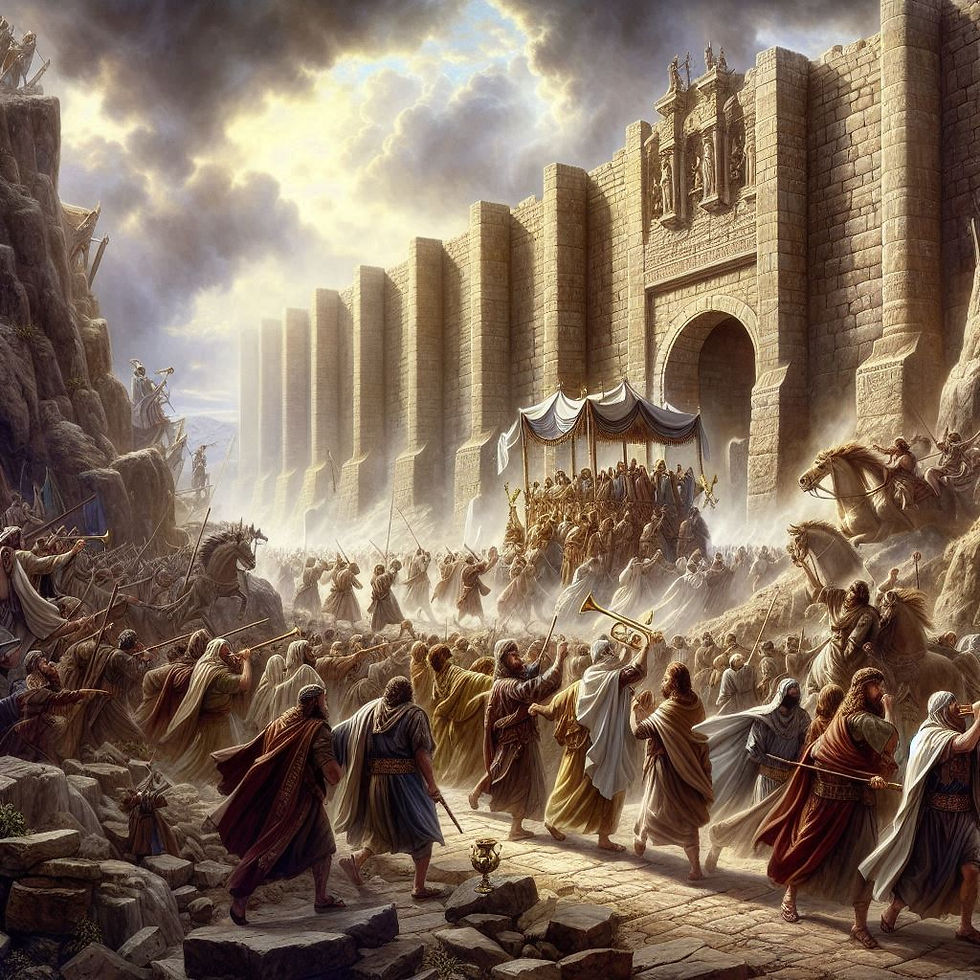
The story of Jericho appears in the Book of Joshua, where the Israelites, led by Joshua, encircle the city for seven days. On the seventh day, they blow trumpets made of ram’s horns, and the walls collapse, allowing them to conquer the city. This event is often interpreted as a miraculous act of God, but it also raises questions about the physical mechanisms behind the collapse.
The narrative highlights several key elements:
The use of trumpets to produce loud sound
The timing of the collapse after sustained sound exposure
The complete destruction of massive stone walls
These details invite us to consider how sound, especially low-frequency vibrations, might affect structures.
Understanding Sound Vibration and Its Effects
Sound is a mechanical wave that travels through air, water, or solids by vibrating particles. When sound waves hit an object, they cause it to vibrate at the same frequency. If the frequency matches the object’s natural frequency, resonance occurs, amplifying the vibrations and potentially causing damage.
Resonance and Structural Damage
Resonance is a well-documented phenomenon. For example:
Bridges and buildings can sway or collapse if exposed to vibrations matching their natural frequencies.
Soldiers break step when crossing bridges to avoid creating resonant vibrations.
Musical instruments use resonance to amplify sound.
Could the Israelites’ trumpets have generated vibrations strong enough to cause resonance in Jericho’s walls?
The Science Behind Sound-Induced Structural Collapse
Modern experiments show that sound waves can affect materials, but the scale and intensity required to bring down stone walls are significant. Some key points include:
Frequency range: Low-frequency sounds (infrasound) can travel long distances and penetrate solid objects.
Amplitude: The louder the sound, the greater the vibration energy transferred.
Material properties: Stone walls have natural frequencies depending on their size, shape, and composition.
Researchers have studied how sound waves can cause cracks or weaken structures over time, but instant collapse requires extremely high energy levels.
Could Ancient Trumpets Produce Such Powerful Vibrations?
The trumpets described in the biblical account were made from ram’s horns, known as shofars. These instruments produce loud, piercing sounds but are limited in volume and frequency range compared to modern devices.
The shofar’s sound frequency typically ranges between 200 and 1000 Hz.
The volume can reach around 110 decibels, comparable to a loud rock concert.
Sustained blowing over several minutes could create continuous vibrations.
While impressive, these factors alone may not fully explain the walls’ collapse. However, combined with other factors like structural weaknesses or seismic activity, sound vibrations could have contributed.
Exploring Alternative Theories: Sound and Seismic Activity
Some scholars propose that the sound of trumpets might have coincided with a natural earthquake or aftershock, weakening the walls. The vibrations from the trumpets could have amplified the seismic waves, accelerating the collapse.
This theory aligns with:
The region’s known seismic activity.
The timing of the event after a prolonged period of marching and blowing trumpets.
The sudden and complete nature of the walls’ fall.
This combination of sound vibration and natural forces offers a plausible explanation grounded in physics.
Modern Applications of Sound Vibration in Demolition and Healing
The story of Jericho inspires modern uses of sound vibration:
Controlled demolition: Engineers use vibrational frequencies to weaken structures safely.
Ultrasound therapy: Medical treatments use sound waves to stimulate healing in tissues.
Non-destructive testing: Sound waves detect cracks and weaknesses in materials.
These examples show how sound vibration can influence physical matter, supporting the idea that ancient peoples might have harnessed sound’s power in ways we are only beginning to understand.
Lessons from Jericho for Today’s World
The story of Jericho encourages us to think beyond traditional explanations and explore the intersection of ancient wisdom and modern science. It reminds us that:
Sound is a powerful force with physical effects.
Ancient technologies, like the shofar, had practical and symbolic significance.
Combining historical narratives with scientific inquiry can reveal new insights.
By studying sound vibration through the lens of Jericho, we open new possibilities for innovation in architecture, engineering, and even spiritual practice.
The story of Jericho is more than a tale of faith; it is a doorway to understanding how sound vibrations might influence the physical world. Whether through resonance, seismic activity, or a combination of forces, the power of sound remains a fascinating subject worthy of exploration. Next time you hear a trumpet or a deep vibration, consider the ancient walls that might have once trembled to the same sound.


Comments